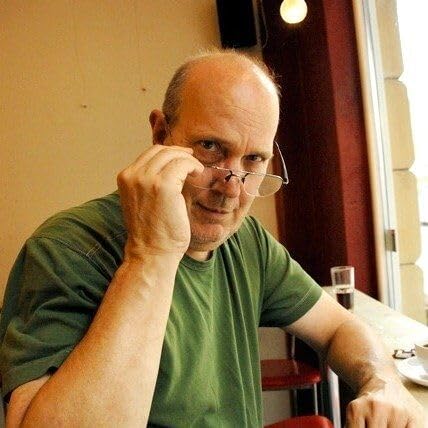
The Inspector General’s report critiques the Roosevelt Island Operating Corporation for misusing nearly $170,000 in public funds for private gain. Despite significant oversight failures, particularly by Howard Polivy, chair of the Audit & Budget Committee, calls for reform have faced resistance. Accountability remains elusive, prompting public engagement for change.
The Inspector General has spoken. The findings are public. Moreover, the documentation is damning. Yet the consequences remain unresolved.
David Stone, The Roosevelt Island Daily’s European Bureau Chief, has already outlined his sharp perspective on the OIG’s report and its implications for Shelton Haynes. Next, we felt it was important to outline ours as well.
While Stone focused on the fallout at the top, we are more concerned with the scaffolding that allowed it all to happen—the oversight mechanisms, or more accurately, the lack of them.
So we ask: Who was watching? Who kept their silence when scrutiny was most needed? And ultimately, who had the power—and the duty—to intervene, yet failed to act?
The Status Labs contract wasn’t an accident. It was a symptom. The real story is about governance, accountability, and the people who are supposed to keep RIOC honest.
The question now is: will we ever hear from Howard Polivy?
The Office of the Inspector General’s (OIG) investigation into Roosevelt Island Operating Corporation’s contract with Status Labs confirms what many residents suspected and a few board members tried—unsuccessfully—to prevent: that nearly $170,000 in public money was used not for public service, but for private image-building.
RIOC hired Status Labs not to inform residents about services or programs, but to enhance the personal reputations of CEO Shelton Haynes and Chief of Staff Akeem Jamal. The OIG concluded the contract was “an unethical use of state funds,” carried out without sufficient board oversight.
That contract, and the failures surrounding it, are now fully documented in The Roosevelt Island Lighthouse’s full report.
But one piece of the story remains conspicuously unresolved.
The chair of both the Audit & Budget and REDAC committees—widely regarded as the board’s most internally active member—has, according to multiple sources, supported the Status Labs contract from its inception. That includes statements made by Shelton Haynes and RIOC’s General Counsel Gretchen Robinson, among others. At this stage, it’s not just a claim—it’s a confirmed position. There’s no logical path to refute it.
That board member is Howard Polivy.
The OIG Report and the Role of Howard Polivy
Howard Polivy is not a peripheral figure in this affair. He is the longtime chair of RIOC’s Audit & Budget Committee—the board member tasked with overseeing public spending.
Multiple sources confirmed to The Lighthouse that Mr. Polivy was aware of the Status Labs engagement and expressed support for it at the time. While the board did not formally vote on the contract (thanks to RIOC’s high discretionary threshold), board awareness—particularly from the Audit chair—is not a footnote. It’s the whole point of oversight.
That’s why we reached out to Mr. Polivy ahead of our report’s release, offering an opportunity to respond on the record.
We asked:
- Do you stand by your support of the Status Labs contract?
- Were you aware that the contract was being used to elevate the personal images of Shelton Haynes and Akeem Jamal?
- Would you like to share your perspective on the findings of the Inspector General’s report?
- Can you clarify whether other board members—or the Board Chair—were informed about the contract’s true purpose?
His reply:
“Dear Mr. Gobblevelt,
I will not be commenting on matters related to ongoing litigation.
Thank you for your understanding.
Howard Polivy”
No acknowledgment. No accountability. Just a boilerplate refusal.
What About Reform?
After the Status Labs contract came to light, several board members began pushing for a reduction in RIOC’s automatic contract approval threshold—then set at $170,000. The goal was clear: prevent future abuse of discretionary spending by requiring board review for more contracts.
Those reform efforts met resistance.
According to multiple sources familiar with internal discussions, neither Mr. Polivy nor the Board Chair supported the push for change. Even as other directors began raising concerns, no action was taken to implement meaningful spending oversight.
In light of the OIG’s findings, we followed up with Mr. Polivy again. This time, we asked just one question:
“Now that the Inspector General has validated those concerns, we ask: would you be willing to support a reduction in the automatic approval threshold going forward?”
We will update readers if he responds.
Why This Matters
We understand the impulse to shrug. “It’s politics.” “It’s Albany.” “It’s always been this way.”
But we’re not talking about abstract bureaucracy—we’re talking about real money. Public money. Your money.
Nearly $170,000 was spent—quietly, without board debate, and without any public value. That happened under the watch of someone whose role was to prevent it.
Howard Polivy wasn’t just a board member. He was the chair of the committee charged with financial accountability. That’s why his silence isn’t neutral—it’s consequential.
The Inspector General laid out the facts. The question now is whether those facts will lead to reform, resignation, or more evasion.
What You Can Do
We don’t have a Facebook page. We don’t tweet. We don’t run ads.
We do the work.
But visibility still matters. And that part? That’s up to you.
If you believe in oversight, if you believe public officials should be accountable when independent investigators uncover wrongdoing—share this article. Email it. Text it. Print it out and tape it on the RIOC office door. Make it visible.
And if you know Howard Polivy personally? Ask him.
If you don’t? Send him an email.
Here’s how:
📧 Howard Polivy – howard.polivy@rioc.ny.gov
📧 Full Board – riocboard@rioc.ny.gov
Be respectful. Be direct. Ask:
- Do you support a reduction in the contract threshold now?
- Do you believe the board should have greater oversight going forward?
- Do you have any personal conclusions to share in light of the OIG’s findings?
The Final Word
Public service is not about protecting personal relationships. It’s not about shielding institutions from embarrassment. And it’s certainly not about remaining quiet when $170,000 is funneled into a contract whose only value was to inflate egos.
Mr. Polivy still has the chance to speak. So far, he’s chosen not to.
But the rest of us still have a voice. Use it.


AVAC: Where the Pipe Curves
This is the final installment in my notes from the December 2nd, Operations Advisory Committee meeting, following “An Emergency, Apparently” and “Rust Is Funny Until It Isn’t”.